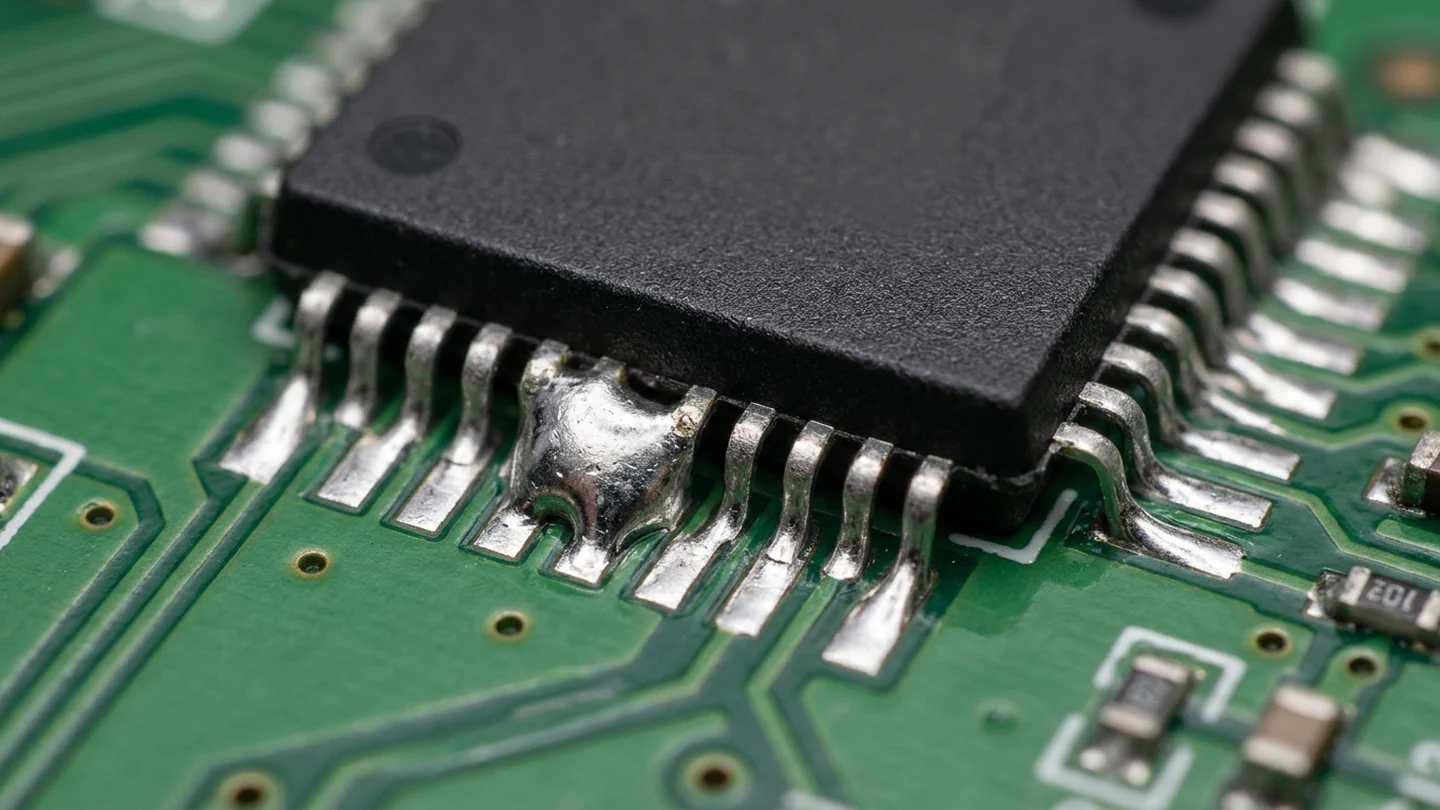
Solder Bridging: Stencil, Reflow & Wave Root Causes
Diagnose solder bridging across stencil printing, placement, reflow, and wave soldering, then stop shorts with solder mask, thief pads, and pad-safe rework.
Technical dispatches and explainers tagged under #smt.
Diagnose solder bridging across stencil printing, placement, reflow, and wave soldering, then stop shorts with solder mask, thief pads, and pad-safe rework.
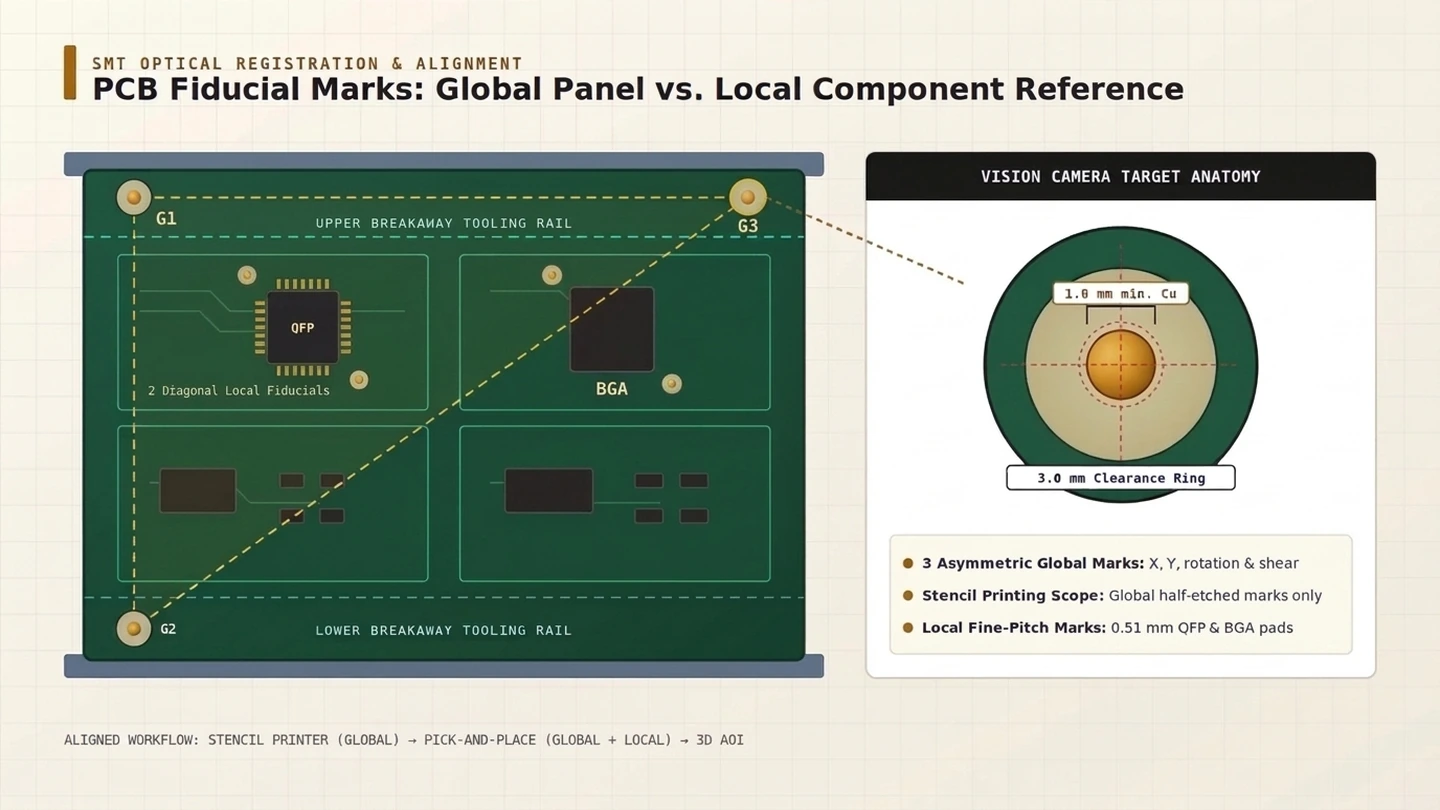
Design PCB fiducial marks for SMT lines: compare 3 asymmetric global marks vs local QFP/BGA fiducials, 1 mm pad sizing, and 3 mm solder-mask clearance.
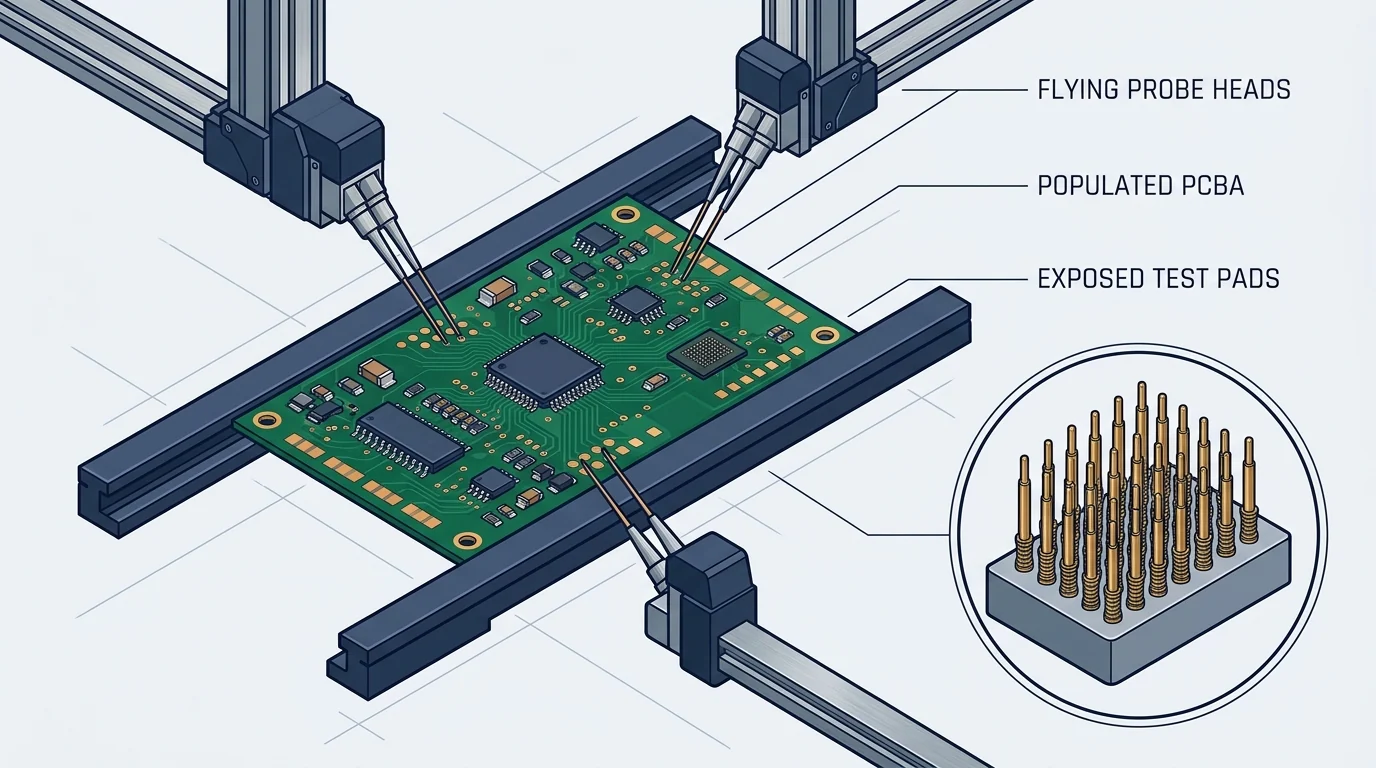
A flying probe test checks populated PCBAs without a custom fixture using 4 to 22 moving probes; bed-of-nails ICT overtakes it after layout freeze at volume.
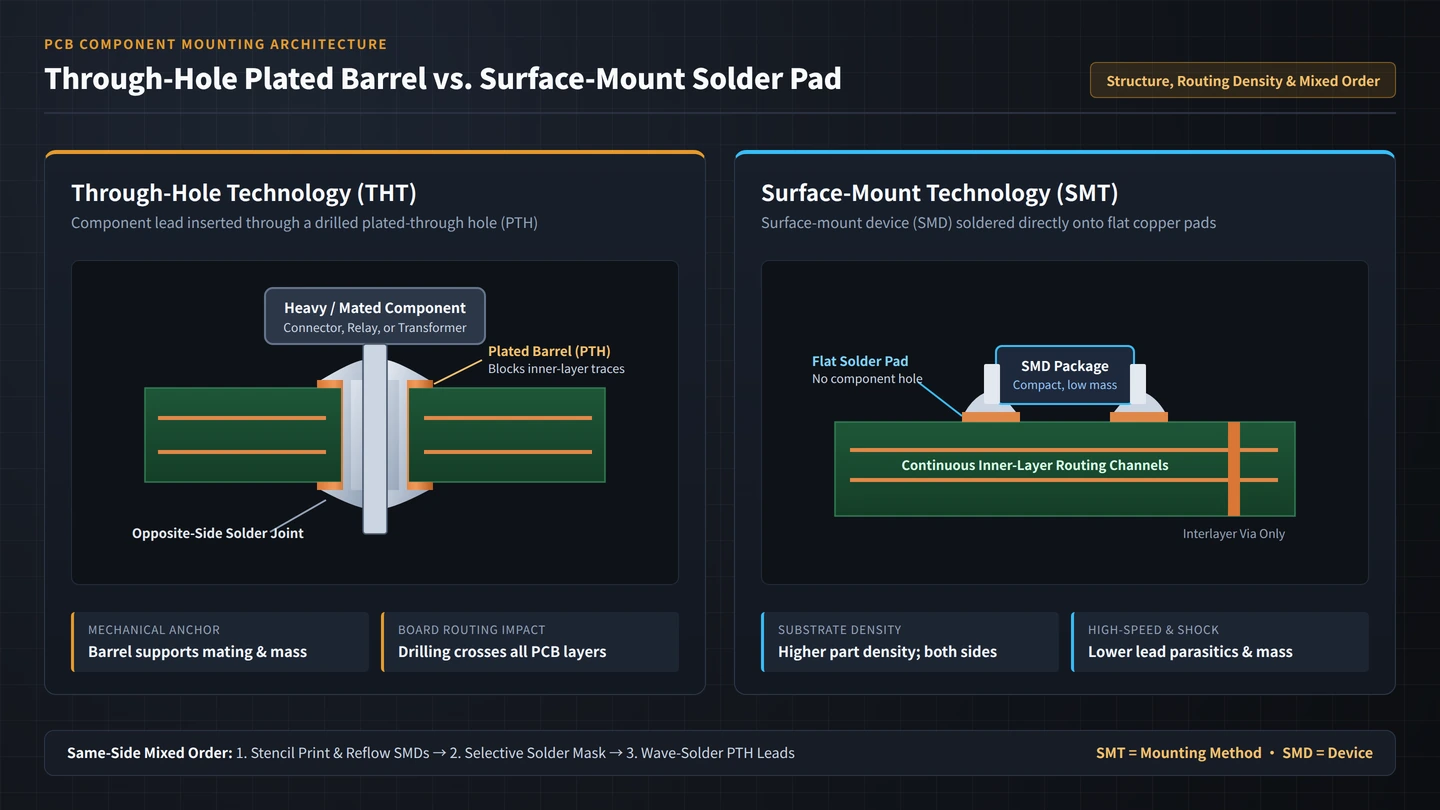
Through-hole mounting inserts leads through drilled holes; surface-mount parts sit on flat pads and reflow first. Keep plated holes for heavy or mated parts.
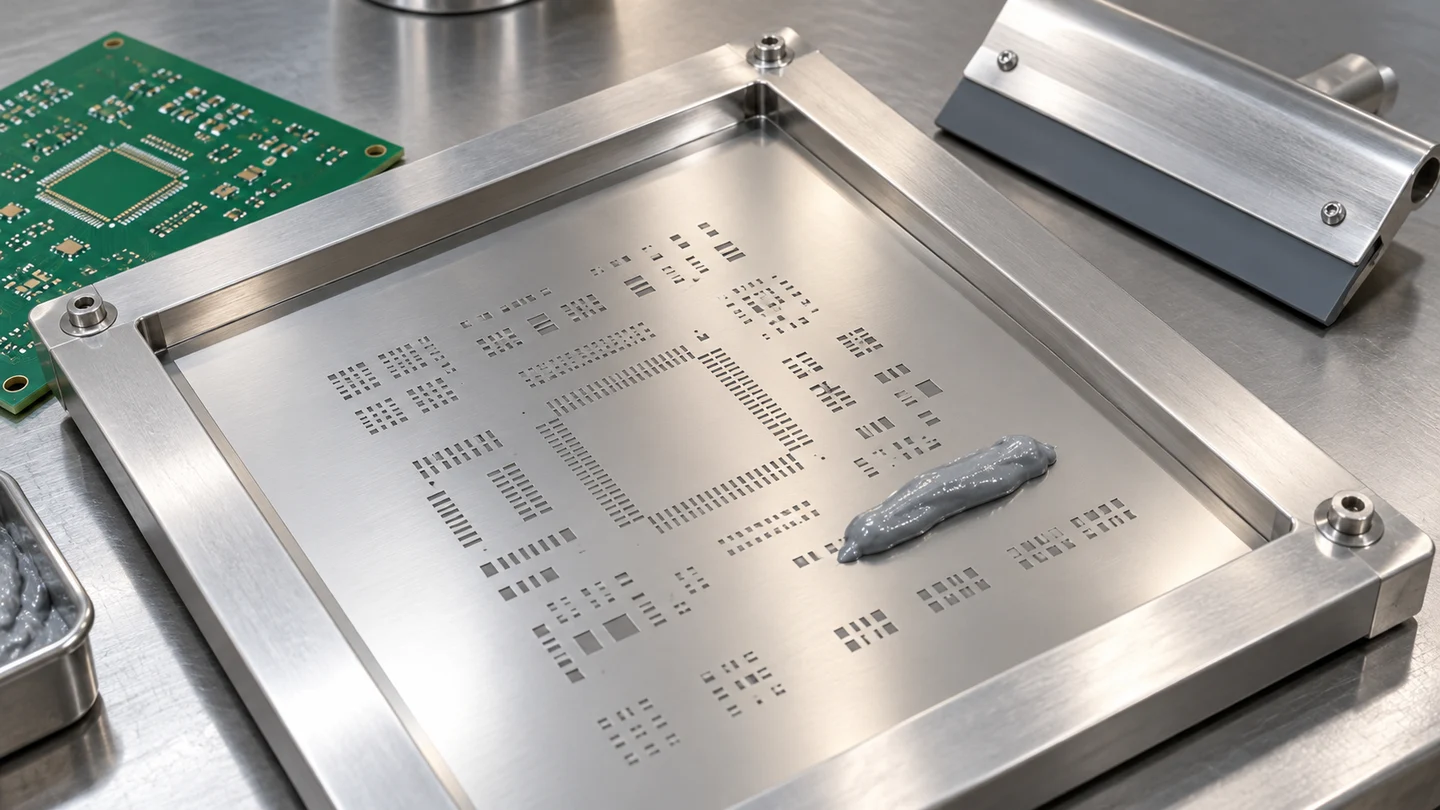
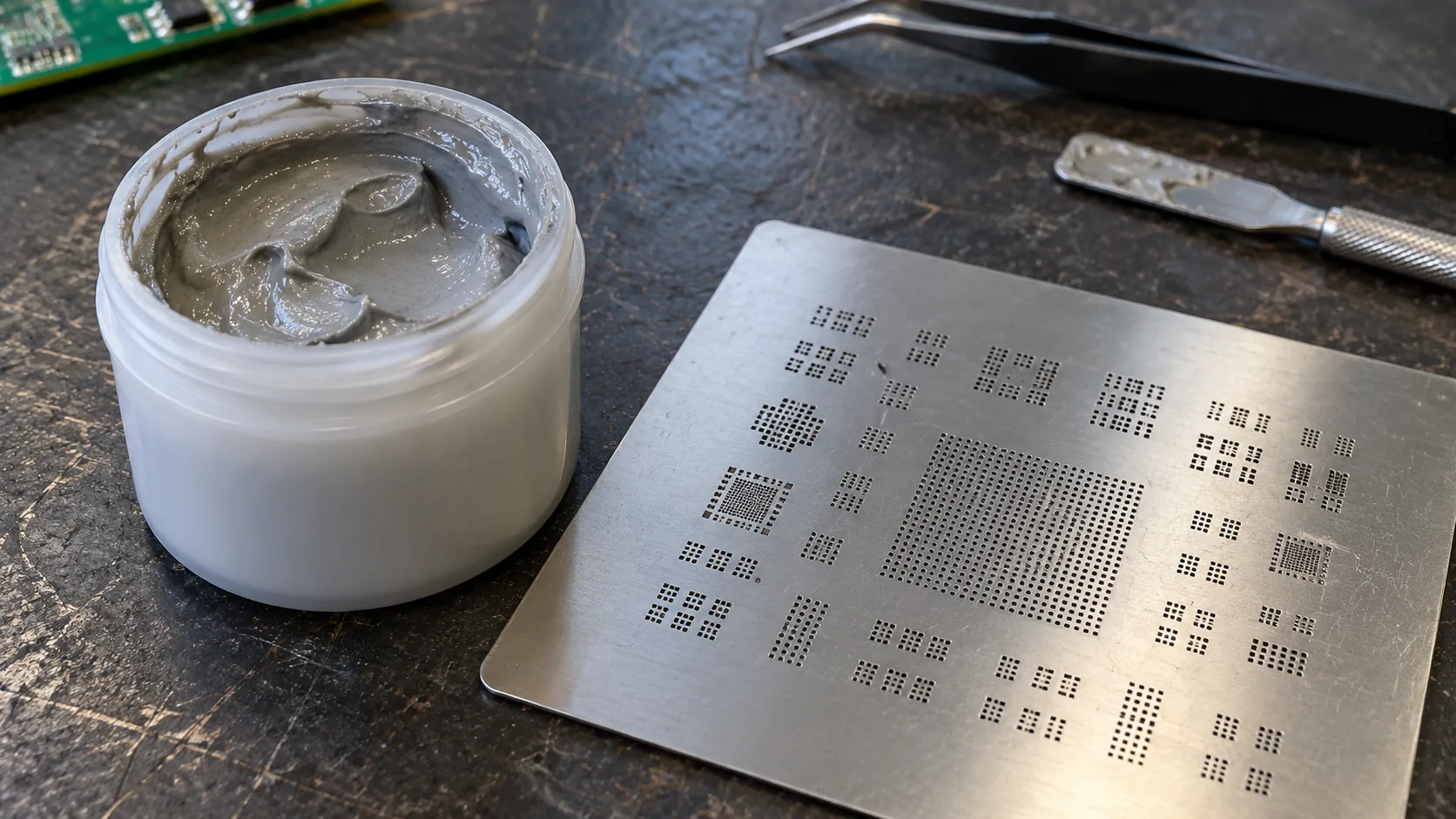
Calculate solder paste stencil area and aspect ratios, compare foil thickness using a 300 µm aperture, and check paste release with SPI before approval.
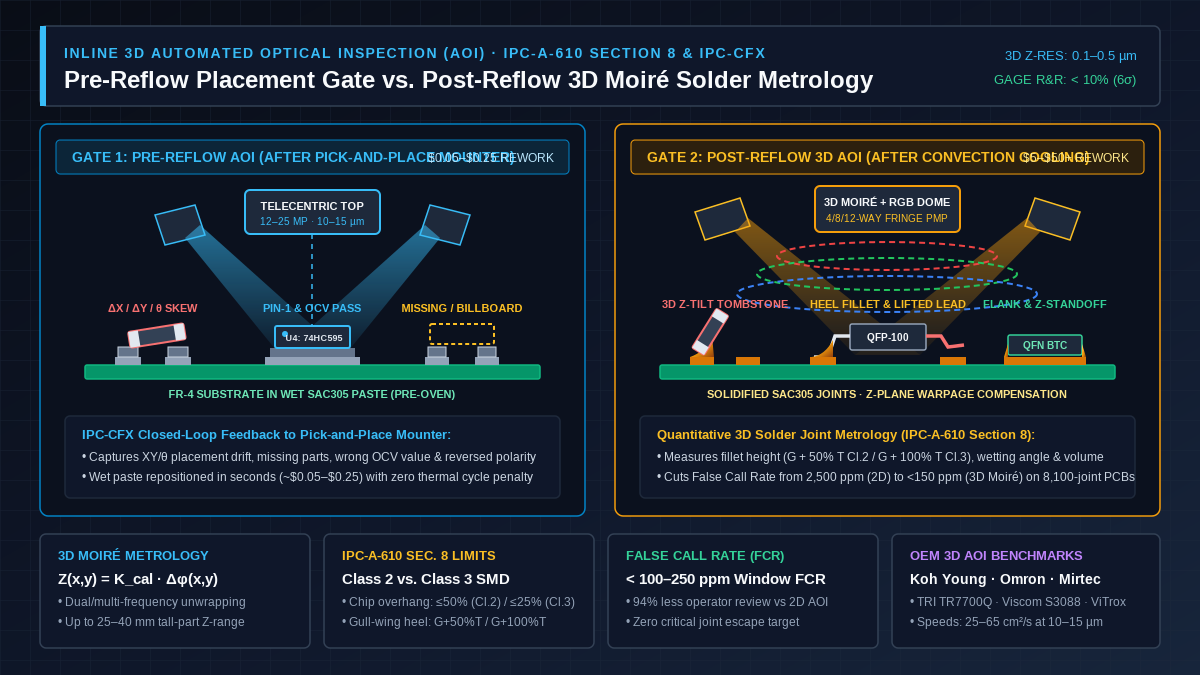
Configure Pre-Reflow and Post-Reflow 3D Automated Optical Inspection (AOI) in SMT assembly: Moiré phase-shift optics, IPC-A-610 Section 8 SMD vs SMT thresholds, and 6 OEM platforms.
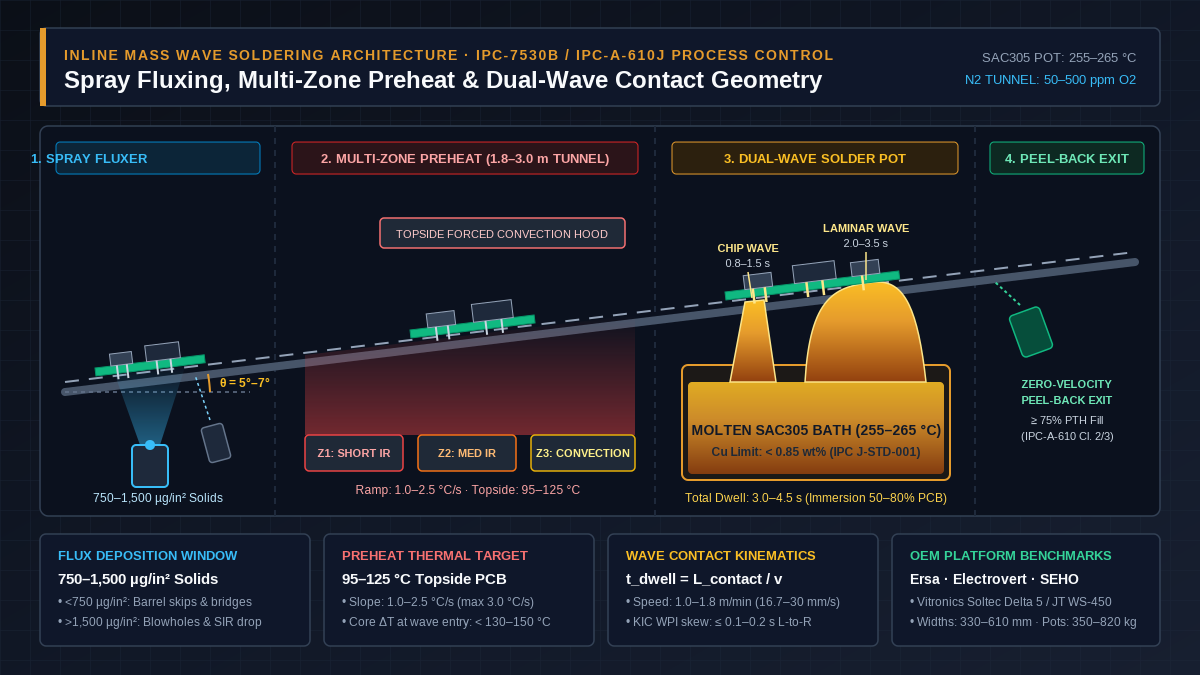
Configure wave soldering equipment across spray fluxing (750–1,500 µg/in²), preheat (95–125 °C topside), and dual-wave SAC305 contact (255–265 °C, 3.0–4.5 s dwell).
ROL0 is a J-STD-004B rosin, low-activity class under 0.05 percent halide. Water-soluble is a wash instruction, not those four letters.
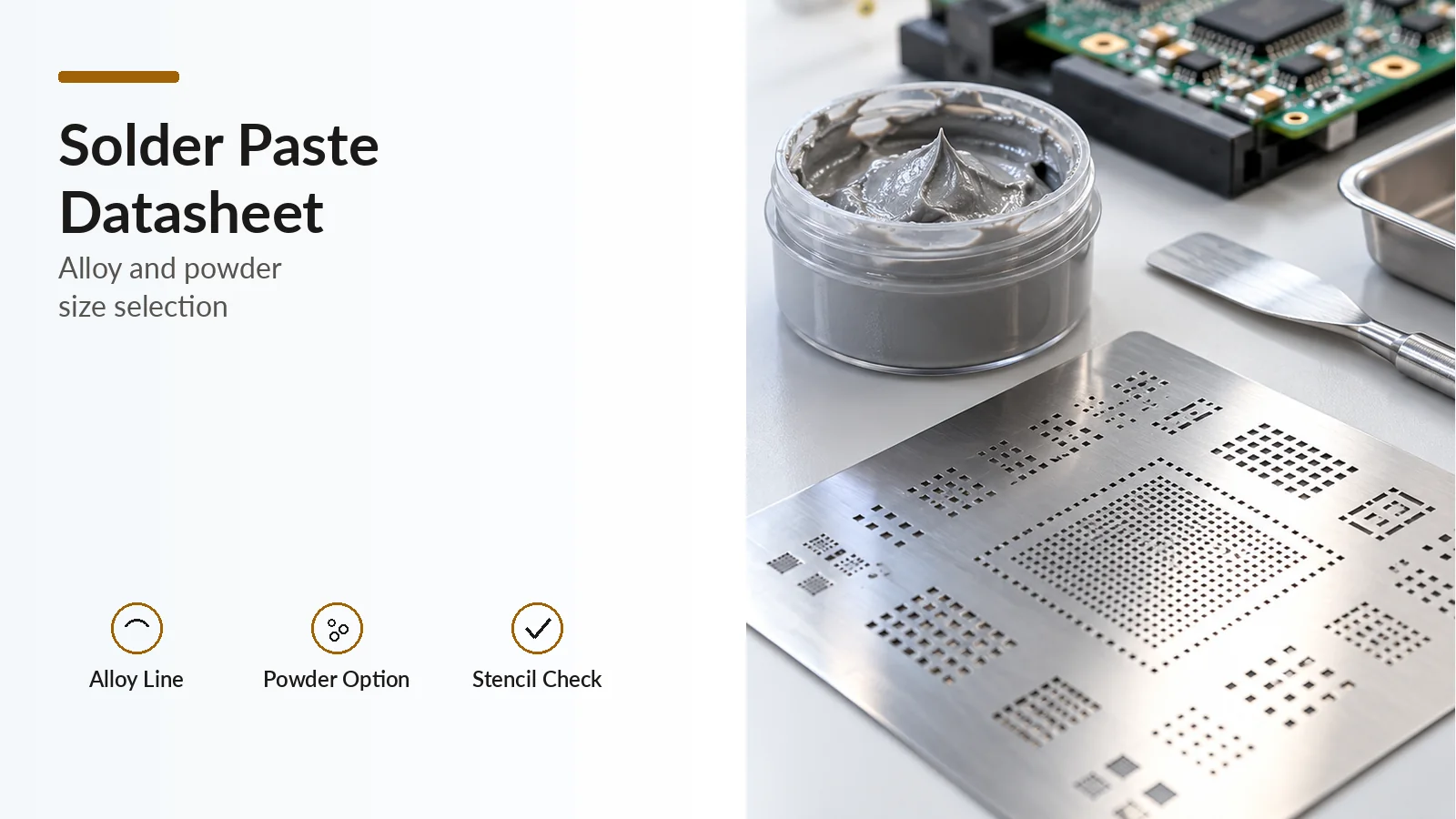
Select solder paste from the actual datasheet: check alloy melting limits, listed powder options, stencil fit, supplier print claims, and graping after reflow.
Record each solder paste container from receiving through warm-up, printing and leftover disposition. Copy storage limits from that product's datasheet.
Convection, infrared, and vapor-phase reflow ovens, then the heated-tunnel length a placement cycle needs. Unprinted peaks and ramps stay blank.
Reflow soldering stages, the J-STD-020 figures those sheets print, and the peak, ramp, and time-above-liquidus cells left blank.
Solder paste types for electronics come from powder size, alloy, and flux class. Check the 5-ball aperture and the 0.66 area ratio before you print.