Mistaking company revenue for factory capacity can lead to costly sourcing decisions. Jabil’s fourth-quarter and fiscal-year 2026 release reports preliminary, unaudited company results, while its fiscal 2027 numbers are management’s outlook.
The manufacturing question is how to use that information in a supplier discussion. Jabil reported FY2026 revenue of USD 36.0 billion in its 30 September release; management linked the year’s performance to AI infrastructure activity and said new capacity had come online. Separately, its FY2027 outlook anticipates further AI demand and growth across other end markets. Our reading is to ask which programs, capacity and responsibilities are relevant to a proposed build, while keeping those company statements separate from project evidence.
- Keep quarterly and annual results separate.
- Read U.S. GAAP and company-defined core measures side by side.
- Treat the forward outlook as a forecast.
- Use company signals to frame questions about a project, rather than to assume available capacity or delivery performance.
The result belongs to a specific reporting period
Jabil published the results on 30 September 2026 for its quarter and fiscal year ended 31 August 2026. EMSNow’s 1 October coverage reports that announcement; it is not a later reporting period or a second independent set of results.
| Record | Date or period | Meaning |
|---|---|---|
| Fourth quarter of FY2026 | Three months ended 31 August 2026 | Quarter’s reported activity |
| Full FY2026 | Fiscal year ended 31 August 2026 | Annual reported activity |
| Official announcement | 30 September 2026 | Release of preliminary, unaudited results |
| EMSNow coverage | 1 October 2026 | Media publication of the company announcement |
The corporate reporting timeline separates fiscal quarter closing dates from public earnings announcements and subsequent supply chain operational reviews.
Timeline of the reporting period and publication dates, based on Jabil’s release and EMSNow’s coverage.
For a procurement review, our suggestion is to label each copied figure with its period, unit, accounting basis and status. Keep that label attached when the figure enters a presentation or comparison sheet. Otherwise, a quarter’s income can be placed beside another company’s annual income without anyone noticing the mismatch.
Takeaway: Preserve the period and preliminary status whenever you reuse a reported figure.
Read GAAP and core figures in parallel
U.S. GAAP means U.S. generally accepted accounting principles. The release presents results on that accounting basis alongside company-defined non-GAAP core measures. The table reproduces its rounded highlights, without calculating new ratios or differences. All amounts are U.S. dollars; EPS means diluted earnings per share.
| Measure | Q4 FY2026 | Full FY2026 |
|---|---|---|
| Net revenue | $10.6 billion | $36.0 billion |
| U.S. GAAP operating income | $602 million | $1.7 billion |
| Core operating income, non-GAAP | $675 million | $2.1 billion |
| U.S. GAAP diluted EPS | $3.76 per share | $9.75 per share |
| Core diluted EPS, non-GAAP | $4.40 per share | $13.09 per share |
Source: Jabil’s 30 September release, preliminary and unaudited. Values use the release’s highlight rounding, rather than the more detailed statement tables.
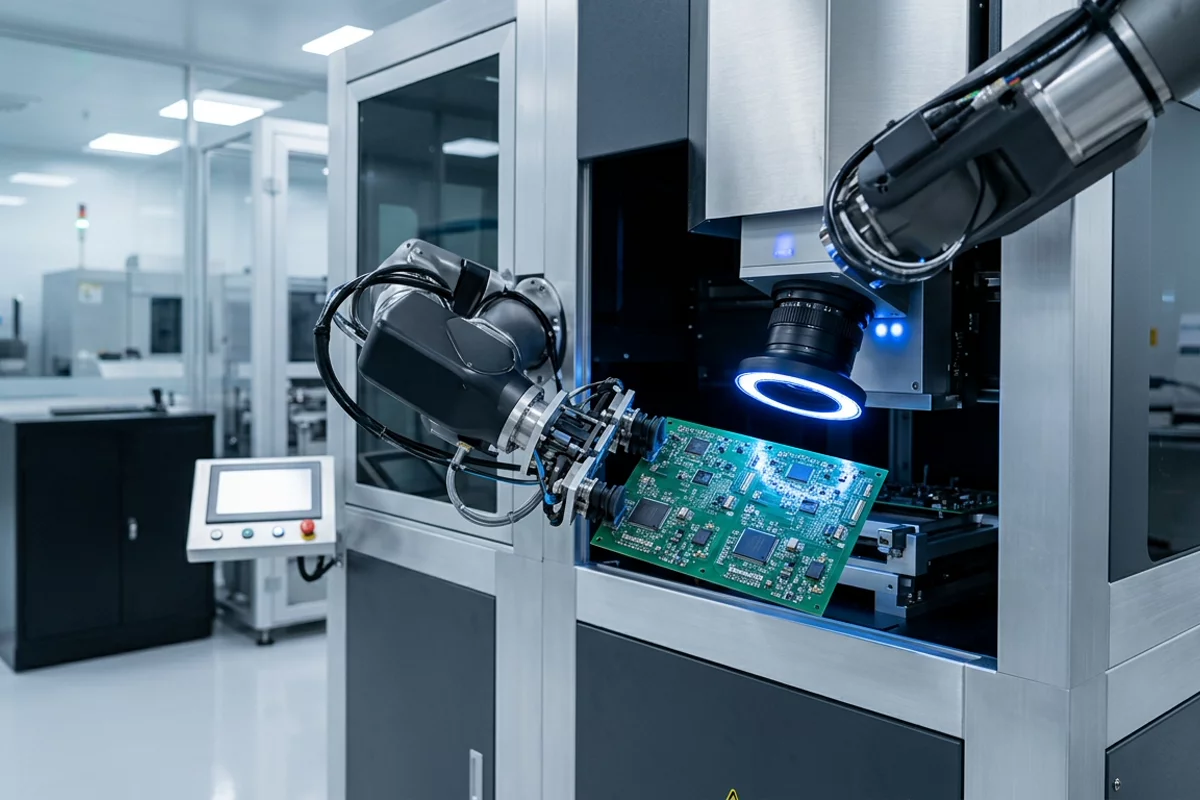
Illustrative photo — generated editorial image, not an official corporate earnings disclosure.
Q4 FY2026 operating income, as reported by Jabil. The two figures use different accounting bases; they are not separate production outputs.
Jabil says its core measures exclude specified amounts included in the corresponding GAAP measures. Its core operating-income definition identifies, among other items, intangible-asset amortization and stock-based compensation expense and related charges. The release supplies definitions and refers readers to its reconciliation; it warns that non-GAAP measures do not have standard meanings across companies. For a comparison, our recommendation is to retain both bases and inspect the adjustments before treating two suppliers’ core numbers as equivalent.
Common mistake: Comparing one company’s core measure with another company’s GAAP figure, or presenting an outlook beside a reported result without labelling the difference.
Takeaway: Keep the financial basis visible, and do not convert financial performance into a process claim.
What management says is driving the business
Management’s comments point to AI infrastructure and a broader mix of end markets. They are company explanations, not an independently measured picture of the entire electronics manufacturing services industry.
| Company statement in the release | Editorial reading for an EMS reader | Question still requiring evidence |
|---|---|---|
| The CEO links FY2026 performance to AI infrastructure growth | Ask how the work mix affects the proposed program | Which AI-related work or other program would use the site and resources being discussed? |
| The CEO says new capacity came online | Separate newly operational capacity from capacity offered to your build | Is that new capacity relevant to your process, site and schedule? |
| Management describes taking on more engineering and manufacturing complexity | Ask which added responsibilities are proposed for your program | Which engineering, supply-chain and manufacturing tasks and approvals would the provider own? |
This is a way to read Jabil’s comments, not a claim that all EMS providers share its demand pattern. The company-level update identifies themes to discuss; the relevant program and resources determine the project implication.
Takeaway: Follow a management signal with a question about the specific manufacturing work.
Keep FY2027 outlook separate from FY2026 results
Jabil’s FY2027 figures are forward-looking guidance. They belong in a forecast column, rather than a column of completed outcomes. Monetary amounts in the table are USD.
| FY2027 company outlook | Published value | Status |
|---|---|---|
| Net revenue | $44.5 billion | Management outlook |
| Core operating margin, non-GAAP | 6.1% | Management outlook |
| Adjusted free cash flow, non-GAAP | Approximately $1.6 billion | Management outlook |
Corporate earnings statements distinguish preliminary GAAP financial metrics from core operating figures and forward-looking management guidance.
Different evidence states: a preliminary company result and a forward-looking outlook. The diagram does not show a guaranteed future outcome.
Jabil defines adjusted free cash flow as cash from operating activities after net capital expenditures; its definition accounts for property, plant and equipment purchases together with proceeds and advances from their sale. This is a company cash-flow measure, not a budget or equipment commitment for an individual project. For a planning document, keep the outlook’s release date and forecast label attached to the numbers.
Takeaway: Use guidance as context for planning questions, while keeping the forecast label intact.
What engineers and buyers can act on
The practical output is a better set of project questions. Our suggested checklist connects a reader’s task to the record needed to make that decision; the release itself supplies no project commitment.
| Reader’s task | Question to carry into the project review | Evidence to request for that project |
|---|---|---|
| Select a manufacturing route | What assembly operations does the product require? | Assembly description and proposed process route |
| Review production availability | Which site and process would serve the build? | Project schedule and confirmed equipment scope |
| Review engineering responsibility | Who owns material selection, process approval and change control? | Agreed scope of work and responsibility record |
| Evaluate a claimed process result | What was measured on the relevant assembly? | Test method, conditions and result record |
Illustrative photo — generated editorial image, not an audited inventory audit report.
Editorial checklist linking company context to project evidence. It does not describe a Jabil customer contract or test.
Use the following references to turn those questions into a description of the proposed work. They are technical reading aids, not evidence about a particular Jabil site.
- Route and material inputs: The soldering-method comparison distinguishes assembly operations; the solder-paste selection inputs help describe a purchased material. The component-by-component soldering questions help specify a mixed assembly, while the flux-class distinctions frame the cleaning input.
- Capacity question: The oven-format and production-volume discussion defines the volume and changeover question. The board-envelope checklist makes the proposed assembly concrete before discussing equipment scope.
- Verification question: The oven verification questions identify project records to request, and the board-level profiling workflow frames a thermal-process review.
Record the provider’s answer beside the actual project requirement, keeping the financial story and the engineering decision traceable to their respective evidence.
Common mistake: Reading a comment about new corporate capacity as proof of spare capacity for a specific board. The release gives no project-level availability commitment.
Takeaway: Make the supplier discussion about a named assembly and a documented requirement.
When to act on this company update
Review the release when company context is relevant to a supplier or project discussion. Our recommendation is to connect that review to an existing decision date, rather than creating an urgent engineering change from an earnings headline.
| Review point | Suggested action | Timing basis |
|---|---|---|
| Company-results review | Preserve the period, basis and preliminary status | Release dated 30 September 2026 |
| Upcoming sourcing or build decision | Ask about the relevant site, process and schedule | Project decision date to confirm |
| Need for final financial status | Check the corresponding company filing or later update | Relevant filing or update date to confirm |
Takeaway: Act at the relevant project review and confirm the date that actually governs the decision.
When this does not apply
This reading cannot establish the EMS industry’s growth rate, another company’s performance, or a factory’s spare capacity, yield, defect rate or lead time. It also does not provide a stock valuation, a share-price explanation or a purchasing recommendation about the shares.
The official release labels the results preliminary and unaudited. A reader needing a completed audit or a later reporting update should check the corresponding company filing rather than treating this news summary as that record. A project needing capacity or delivery assurance requires evidence covering that project.
| Open question | Who can clarify it | Relevant document |
|---|---|---|
| Availability of the relevant site and process | Proposed manufacturing provider | Project-specific scope and schedule |
| Performance on the actual assembly | Project engineering owner | Test conditions and result record |
| Later or final financial status | Jabil | Corresponding company filing or update |
Suggested follow-up points; no site availability or test result is asserted here.
The checklists are editorial suggestions, rather than an industry-wide dataset, supplier ranking or contractual requirement.
Takeaway: Stop at the company-level evidence, and obtain the separate record needed for the next decision.
Method and sources
Checked on 8 October 2026. Every displayed financial value was checked against Jabil’s official 30 September release. This page uses the rounded highlights, preserves their units and accounting labels, and makes no independent financial calculations. EMSNow’s 1 October article reproduces the same announcement and is treated as coverage of one company source.
Management comments are attributed to management; the project checklist is this article’s interpretation. No industry-wide dataset or project performance study is used to extend the company’s numbers. The source documents are linked below.
Takeaway: Keep the company’s disclosure and the article’s project questions clearly identified.
Related reading
Choose a starting guide if the project question is still broad:
- Reflow oven selection — move from a capacity headline to a complete equipment-selection sequence.
- Solder paste selection — work through the material decision before narrowing a supplier question.
Takeaway: Start with the full guide for an undefined requirement; use the section links above for a specific review.