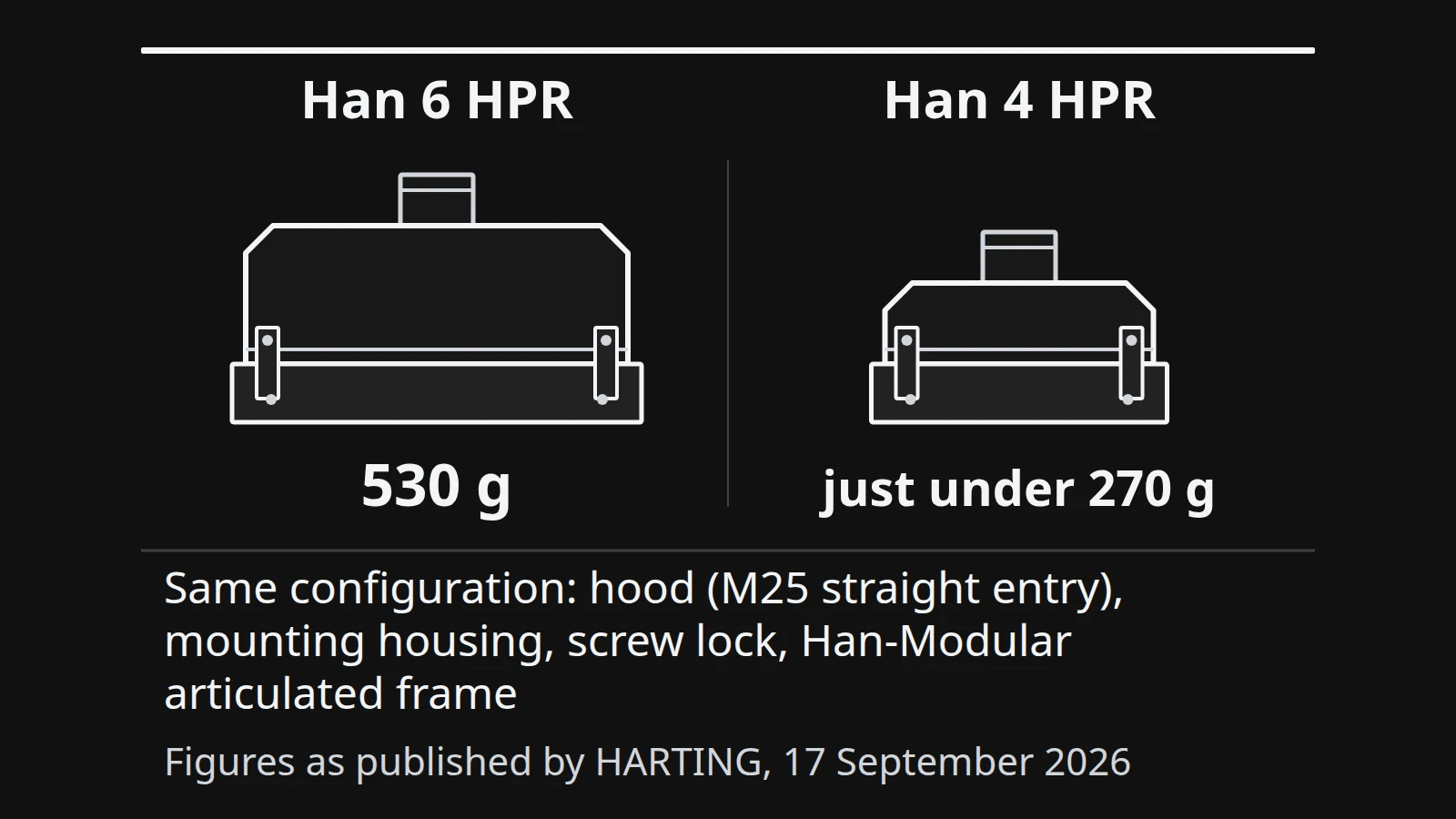
Reading HARTING’s new Han Size 4 figures as general facts could cost a rail cabinet redesign that fails its weight or certification check. HARTING announced on 17 September 2026 that its intermediate Size 4 housing now covers the Han HPR, Han B and Han-Eco ranges with “up to 70 A”, but its 55% space and 530 g to under 270 g weight figures describe one Han 4 HPR configuration, not every Size 4 connector.
What is confirmed: HARTING announced the range extension in its own release, and Instrumentation Monthly reprinted it word for word on 2 October 2026, so there is one source, not two. What applies where: the 55% footprint reduction (against Han 6 HPR), the “almost 40%” (against Han 6 HPR Compact) and the weight comparison are stated for Han 4 HPR in a specified configuration. What the sources we checked do not give: the inserts, wire sizes and derating behind 70 A, which certificates cover which parts, and US availability.
- HARTING first showed Size 4 for Han-Eco, Han B and Han HPR in Hannover Messe press material dated 21 April 2026.
- The September release is the HPR-focused, rail-oriented announcement with the space and weight figures.
- The hood product page we checked lists EN 45545-2 railway fire protection and a UL 1977 file for that hood only.
- Treat every number below as “HARTING says”: our sources include no independent test, and this independent site has not tested any connector.
What did HARTING announce, and when?
HARTING has announced Size 4 twice in 2026: first as a new intermediate size for three Han ranges at Hannover Messe in April, then in September with a release focused on Han 4 HPR for transport, which carries the space and weight comparisons. The table separates the events and the type of each source.
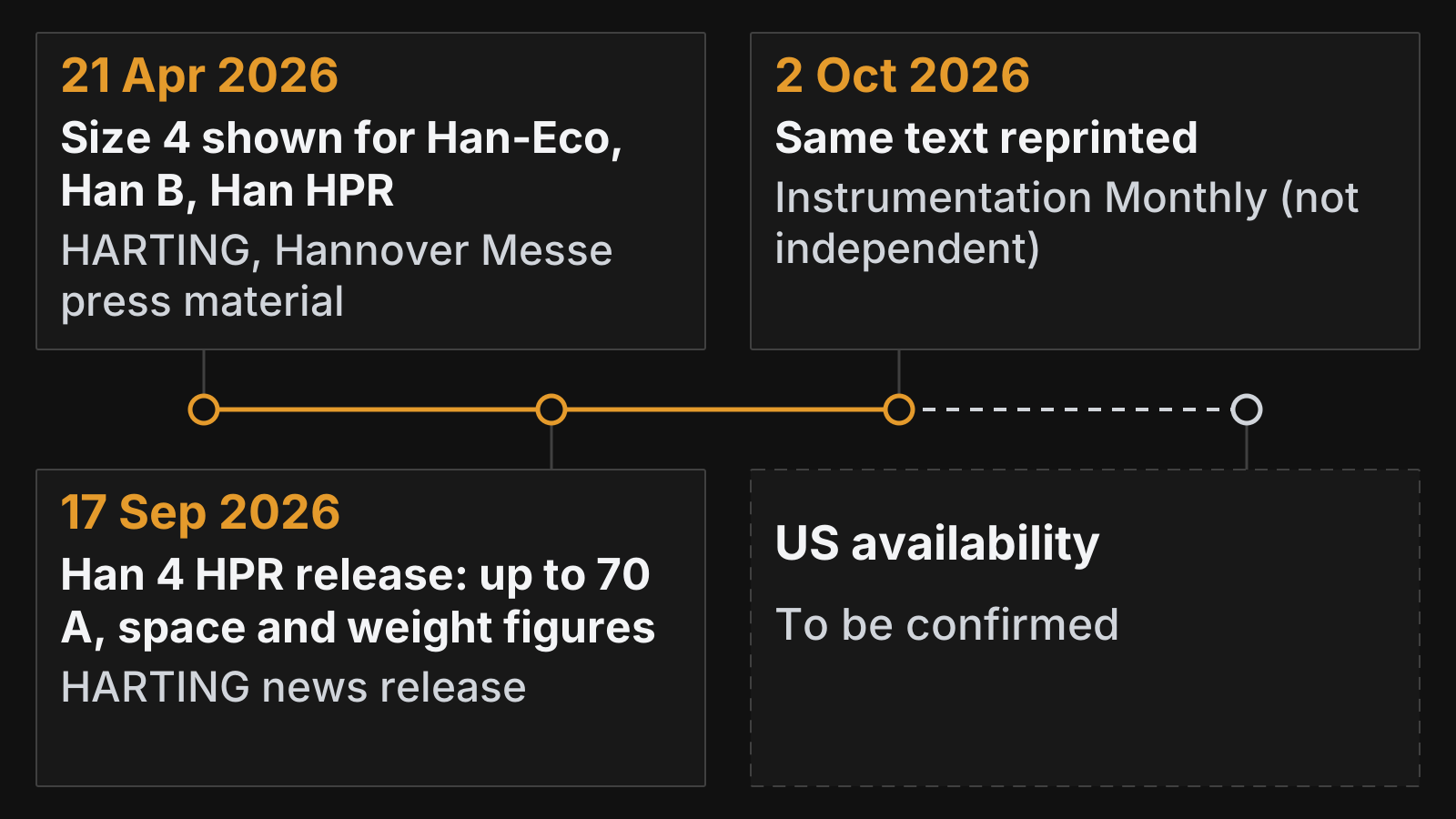
Figure 1. Announcement timeline. Only HARTING’s own documents are primary sources.
| Date | Event | Source | Source type |
|---|---|---|---|
| 21 April 2026 | Size 4 housings and inserts introduced for Han-Eco, Han B and Han HPR; “up to 50%” space saving against the next larger size; positioned between Han 3 and Han 6 | HARTING German release, Hannover Messe 2026 press kit | Manufacturer |
| 17 September 2026 | Han 4 HPR release: up to 70 A; 55% and almost 40% footprint figures; 530 g vs under 270 g weight comparison | HARTING English release | Manufacturer |
| 2 October 2026 | Same text reprinted | Instrumentation Monthly | Trade media reprint (not independent) |
| Checked 7 October 2026 | Hood 19 40 004 0410 listed as new, with ratings and approvals; prices and availability behind login | HARTING product page | Manufacturer |
The April release also explains why the size exists: the next larger Han-Eco 6B does not suit every application, while the smaller Han 3A cannot carry the required 70 A because its maximum is 40 A. It adds that adapters let users fit more than 100 Han-Modular modules, including protective-earth modules. These are HARTING statements, translated from German by us. Like Teledyne FLIR’s Prism A-ISR launch, this is a single-company announcement with no independent test data.
If your cabinet also carries hazardous-area instruments, our Emerson QX1400 certification timeline shows how to keep an announcement date apart from a certificate date.
Takeaway: Date your evaluation against the September HPR release, but remember Size 4 itself was first shown in April.
Which numbers apply to which configuration?
Each headline number in the releases is tied to a specific comparison, and only the HPR figures come with a defined configuration. Use the table to check whether a number applies to the connector you are actually evaluating.
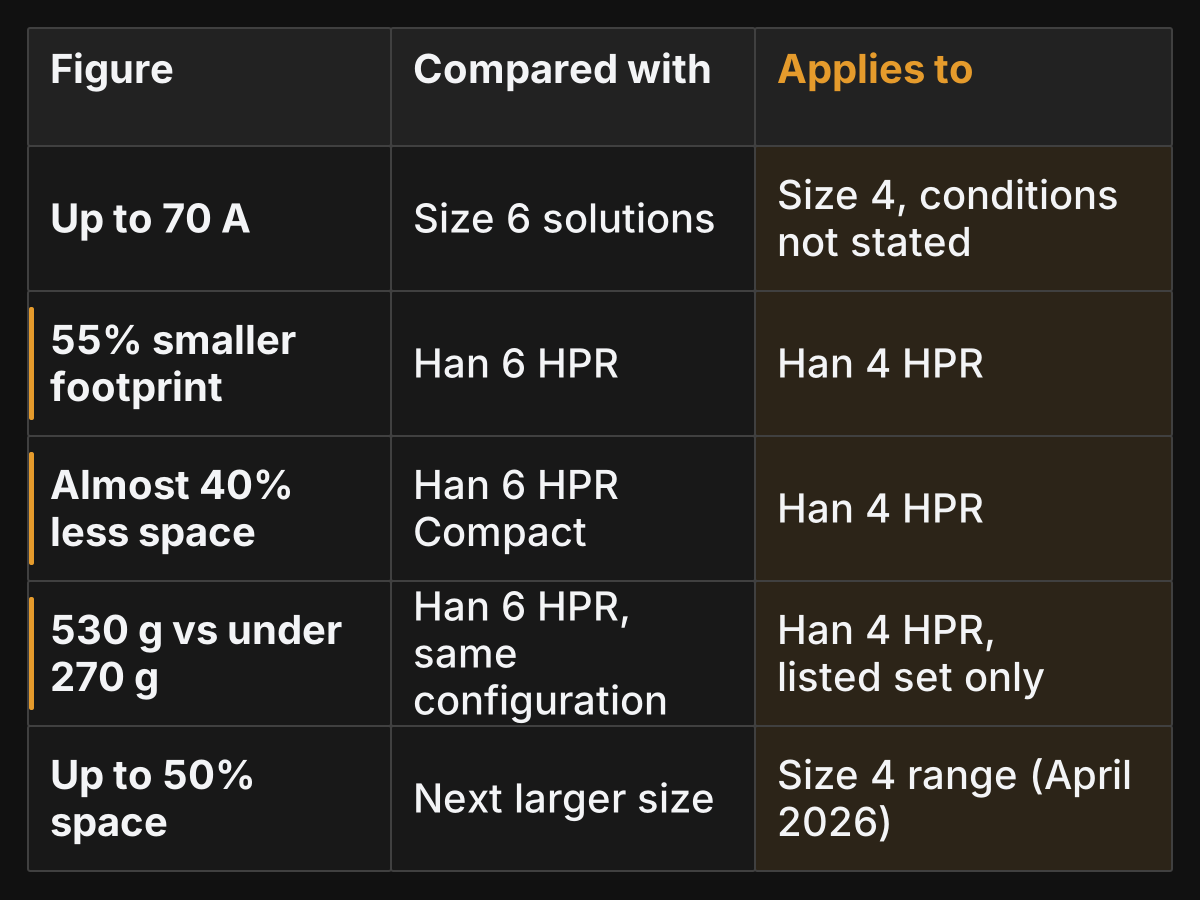
Figure 2. Each figure and the comparison it was stated for. All figures are HARTING’s.
| Figure | Stated comparison | Applies to | Source |
|---|---|---|---|
| Up to 70 A | “Just as capable as Size 6 solutions” | Size 4 across HPR, B and Eco; conditions not stated | September release |
| 55% smaller footprint | Han 4 HPR vs Han 6 HPR, on the mounting wall | Han 4 HPR | September release |
| Almost 40% less space | Han 4 HPR vs Han 6 HPR Compact | Han 4 HPR | September release |
| 530 g vs just under 270 g | Han 6 HPR vs Han 4 HPR, each with hood (M25 straight entry), mounting housing, screw lock and Han-Modular articulated frame | That configuration; the saving comes partly from a plastic instead of metal frame | September release |
| Up to 50% space | Size 4 vs the next larger size | New Size 4 range, no per-series breakdown | April release |
| “50% weight and installation space” | Image caption | Summary caption with no comparison or configuration stated; does not replace the figures in the text | September release |
Two points matter for a rail cabinet. First, the weight comparison covers the full listed HPR set, and HARTING attributes part of the saving to a plastic mounting frame instead of a metal one, so a design that keeps metal parts or a different hood should not assume the same saving. Second, the release states that the lighter version still meets IP68/IP69, but the per-part protection ratings are on the product pages; the hood we checked lists IP65, IP68 and IP69/IPX9K.
Common mistake: Carrying the HPR footprint and weight figures over to Han B or Han-Eco. HARTING publishes them for HPR only; for the other ranges the April release gives a general “up to 50%” against the next larger size.
Takeaway: Quote each figure with its comparison and configuration, or not at all.
Who is affected?
The announcement matters most to engineers who use Han 6-class heavy-duty connectors where panel space and weight count, especially on rail vehicles, and to buyers who must document approvals. The table sets out what changes for each group and what the evidence supports.
| Reader | What changes | Basis | What to ask for |
|---|---|---|---|
| Rail vehicle electrical cabinet designers | A smaller HPR option at up to 70 A; possible panel and weight savings | September release (HPR figures) | Insert datasheets, derating curves, EN 45545-2 data per part |
| Machinery and robotics designers | Size 4 in Han B and Han-Eco for drives and inverters | April release | Per-series dimensions and current ratings |
| US buyers and compliance staff | New part numbers with UL and CSA files on at least the hood | Hood product page | Certificates covering the complete connector set; regional approvals differ |
| Teams with installed Han 6 designs | Possible downsizing at redesign | Both releases | Adapter and module compatibility list |
Our profileGAUGE C.ODC integration notes show how a datasheet’s footnotes can change a headline number.
Other connector, sensor and analyzer announcements are collected in our industrial electronics explainers.
Takeaway: Rail HPR users get the most specific data; everyone else is working from general claims.
When should rail and machine builders act?
Now is the time to request documents and samples for evaluation; it is too early to fix a cut-in date, because the releases and the product page we checked give no US availability, lead time or price. The timeline below separates what has happened from what you need to schedule.
| When | Action | Status |
|---|---|---|
| Now | Request insert and contact datasheets with derating curves, and the certificates for each part number | Documents not linked from the releases |
| Now | Ask HARTING or a US distributor for stock, lead time and pricing | To be confirmed; product page requires login |
| Before layout freeze | Check panel cut-out, cable entry, insert layout and frame material against your Han 6 design | Depends on the documents above |
| Before qualification | Confirm fire protection (EN 45545-2) and UL/CSA coverage for the complete set | To be confirmed per part |
| US cut-in date | Not set | No date published |
Micro-Epsilon’s new inline micrometer is in a similar position, with documents online but US timing open; see when integrators should act on it.
Takeaway: Start the document request now; hold the design decision until the derating data and certificates arrive.
What is still unconfirmed?
Six items decide whether Han 4 HPR works in a given design, and none is answered in the releases. Each row names who can confirm it and which document to ask for.
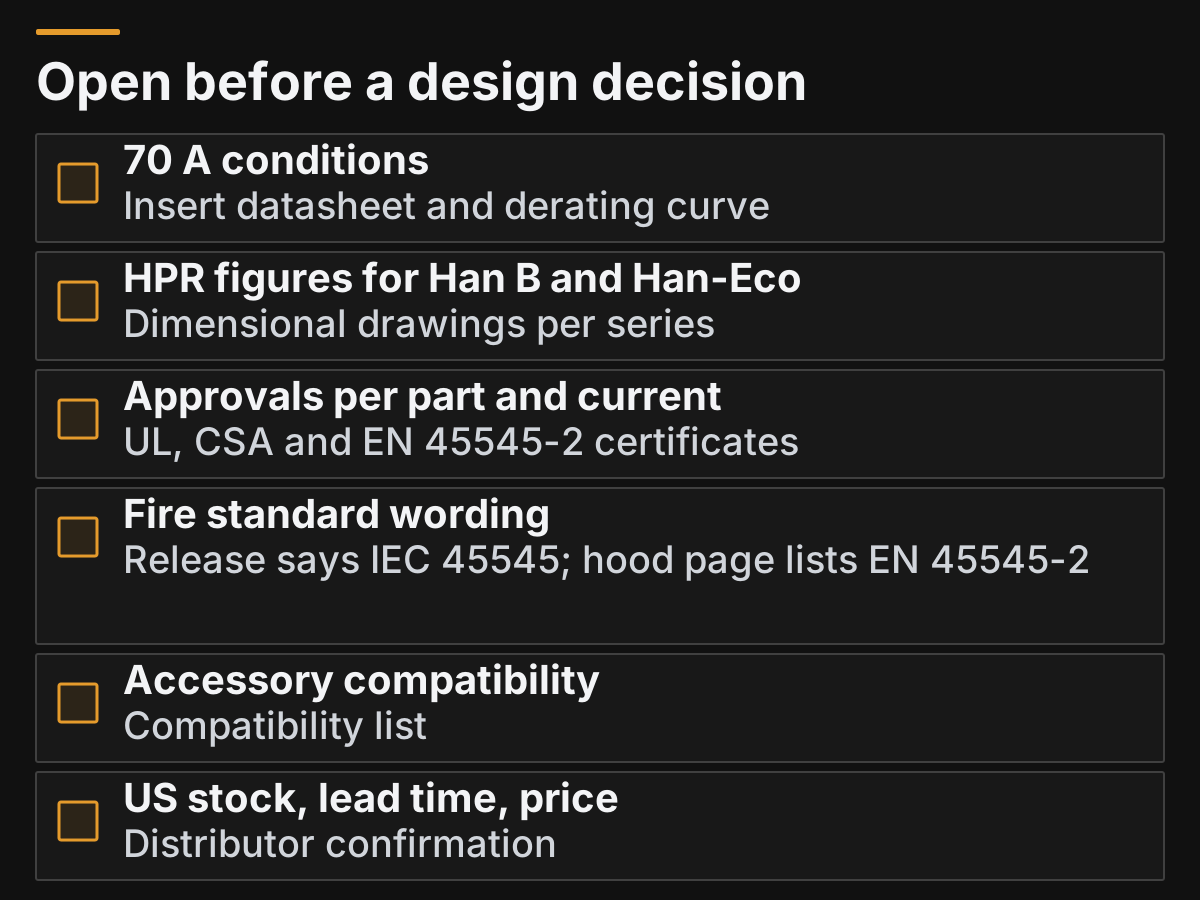
Figure 3. Open items before a design decision, with the document that answers each.
| Open item | Who can confirm | Document to ask for |
|---|---|---|
| Conditions behind “up to 70 A” (insert or module, wire size, temperature rise, derating) | HARTING | Insert or module datasheet with derating curve |
| Whether any HPR space or weight figure applies to Han B or Han-Eco | HARTING | Dimensional drawings per series |
| Which approvals cover which parts at which current | HARTING | UL, CSA and EN 45545-2 certificates per part number |
| Fire standard wording | HARTING | The release says “certified to IEC 45545 and UL 1977”; the hood page lists EN 45545-2 (2020-08) + A1 (2023-10) and a UL 1977 file; confirm the certificate titles |
| Compatibility with existing Han 6 accessories and Han-Modular frames | HARTING or distributor | Accessory compatibility list |
| US stock, lead time and price | US distributor | Quotation and lead-time confirmation |
On the fire standard: EN 45545-2 is the European railway fire protection standard named on the hood page, with its 2020 edition and 2023 amendment. The release’s “IEC 45545” wording does not match it, so rely on the certificate, not the release text. The hood page also lists UL 50/50E Type 4, 4X and 12 enclosure ratings and a limiting temperature of −40 to +125 °C, with a note that it applies to use as a connector under IEC 61984; these describe that hood, not the full connector.
The same certificate-first approach applies to hazardous-area equipment, as our list of open items on the Emerson QX1400 shows.
Takeaway: Get the certificate and derating data for your exact part numbers before you compare Han 4 with Han 6.
Our reading
Size 4 fills a real gap in HARTING’s own range, by HARTING’s account: Han 3A cannot reach 70 A and Han 6 is larger than some panels allow. For rail cabinets the HPR weight figure is the most useful number, because it comes with a defined configuration. The rest still rests on one manufacturer’s statements; until insert ratings and certificates arrive, treat Han 4 HPR as a candidate to evaluate, not a drop-in replacement. More industrial announcements are tracked in our industrial electronics section.
Takeaway: Evaluate Han 4 HPR on documents for your part numbers, not on the release.
When this does not apply
This explainer covers HARTING’s Size 4 announcements as published by 7 October 2026. It does not apply to:
- Han 4A or other “A” series parts. These are a different, smaller family; check the series letter in the part number.
- Other connector makers’ “size 4” products. Nothing here transfers to them.
- Final certification decisions. Those rest on the certificates for your part numbers, not on this summary.
- Pricing. The sources we checked show no prices; the product page shows them only after login.
Takeaway: Use this page to plan questions, not to approve a part.
Method and sources
Compiled on 7 October 2026 from HARTING’s English release of 17 September 2026, its German Hannover Messe release of 21 April 2026 (translated by us), and the product page for hood 19 40 004 0410, plus the Instrumentation Monthly reprint of 2 October 2026, which we count as the same source. We did not test any connector. A distributor page that appears in search results could not be opened and is not cited. This site is independent and not affiliated with HARTING. We will update this page if HARTING publishes insert ratings, certificates or US availability.
Takeaway: Use this page as a map of HARTING’s own claims and their scope, then check each against the documents for your part numbers.