Designing a US analyzer shelter around a certification that has not yet been issued risks a failed inspection and a late redesign. As of 7 October 2026, Emerson says its Rosemount QX1400 continuous gas analyzer holds ATEX and IECEx approvals for hazardous areas, while North American Class I, Division 2 certification is only expected by the end of 2026.
What is confirmed: Emerson announced the QX1400 on 1 October 2026 with ATEX II 2G Ex d IIB H2 T4 for Europe and IECEx Ex db IIB+H2 T4 Gb for the rest of the world, and stated that North American certification for Class I, Division 2, Groups B, C, D, T4 is expected by the end of 2026. What that means in the US: the announcement does not show that the QX1400 meets any of the routes OSHA’s hazardous-location rule allows for a Division 2 area today; the North American approval Emerson expects would be the usual route. Media reports repeat Emerson’s release and are not independent confirmation.
What did Emerson announce?
Emerson announced the release of the Rosemount QX1400 Continuous Gas Analyzer for natural gas quality monitoring, continuous emissions monitoring systems (CEMS) and similar applications, positioned as the hazardous-area version of its QX1000 hybrid analyzer. The timeline below separates the events and their sources.
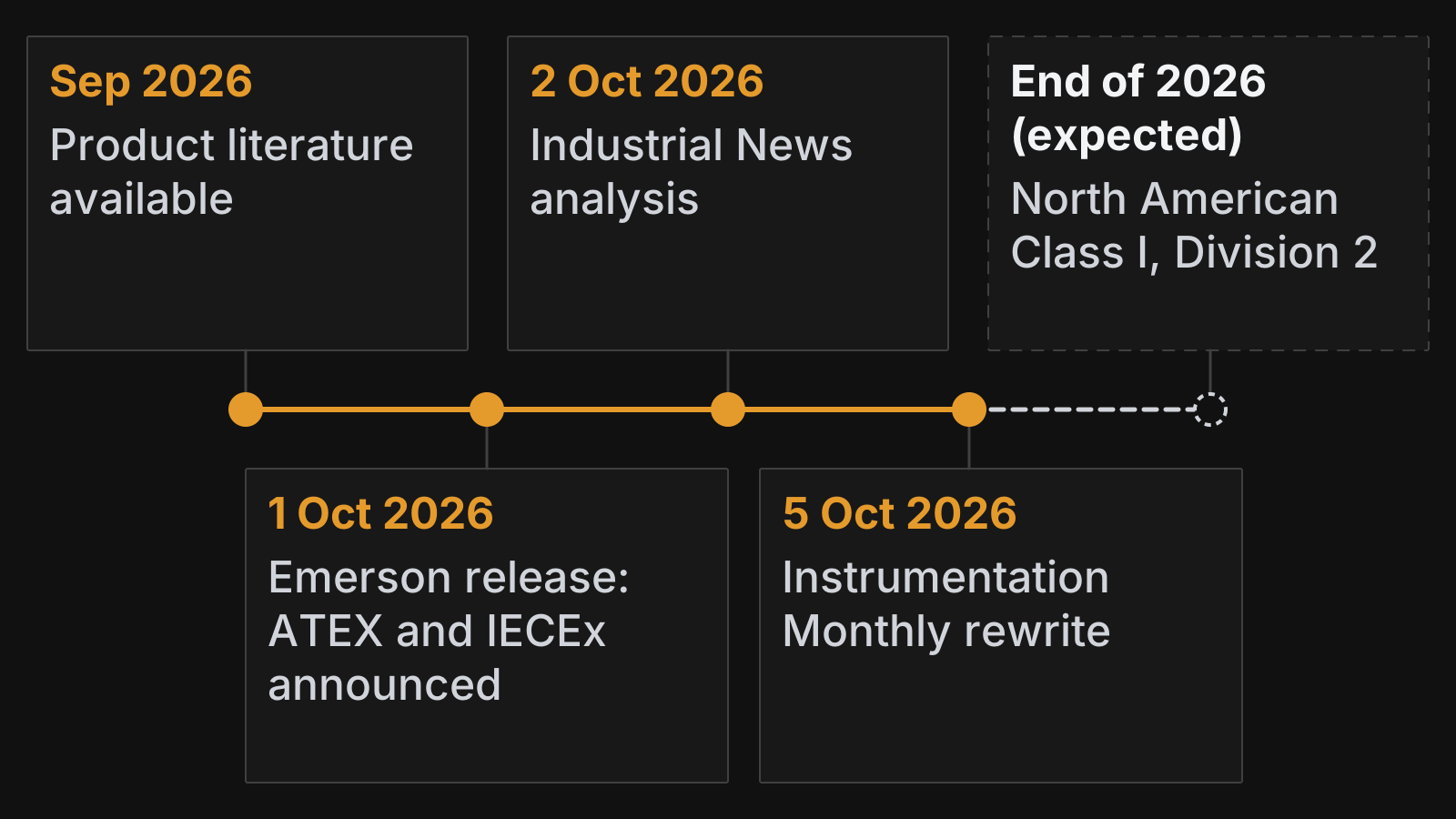
Figure 1. QX1400 timeline. The North American date is Emerson’s expectation, not a certificate.
| Date | Event | Source | Source type |
|---|---|---|---|
| September 2026 | Product literature and application notes available | Industrial News, citing Emerson’s document register | Trade media |
| 1 October 2026 | QX1400 release; ATEX and IECEx approvals announced; North American approval expected | Emerson news release | Manufacturer |
| 2 October 2026 | Report framing October as a certification and deployment step | Industrial News | Trade media analysis |
| 5 October 2026 | Rewrite of the release | Instrumentation Monthly | Trade media, not independent |
| By end of 2026 (expected) | North American Class I, Division 2, Groups B, C, D, T4 | Emerson news release | Manufacturer expectation |
On measurement, Emerson says oxygen is measured by paramagnetic detection and all other gases by quantum cascade laser direct absorption spectroscopy. Standard configurations measure CO, CO₂, O₂, NO, NO₂ and SO₂, typically one to four gases per analyzer, with CH₄ and N₂O available. The release names LNG, carbon capture and storage, ethylene and hydrogen purity, and chemical and petrochemical plants among the applications.
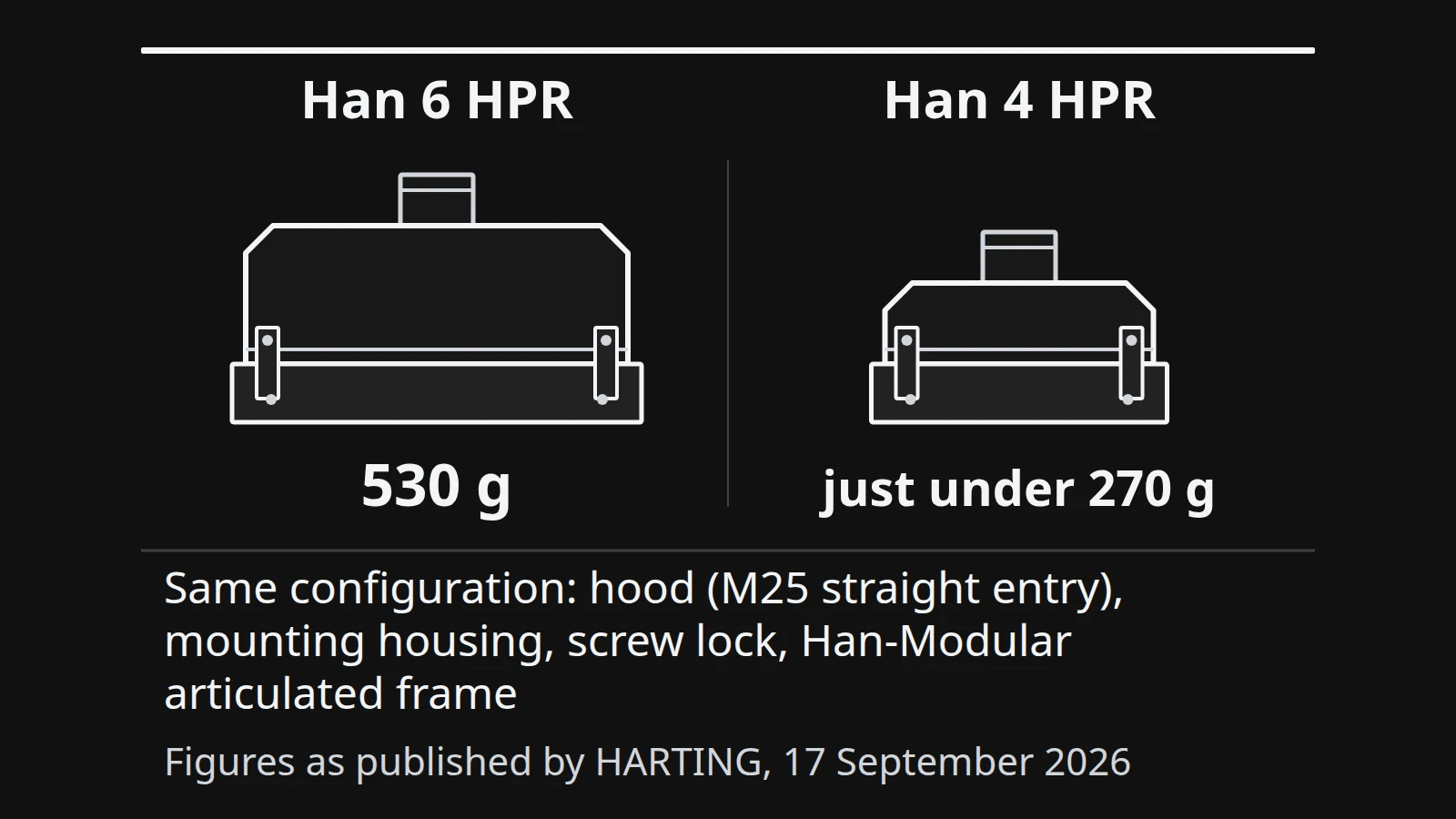
The same pattern of a product first shown earlier and announced again with new data appears in HARTING’s Han Size 4 timeline.
Takeaway: Date your evaluation from the 1 October release, and treat the September documents as the earlier product literature.
What is certified now and what is still pending?
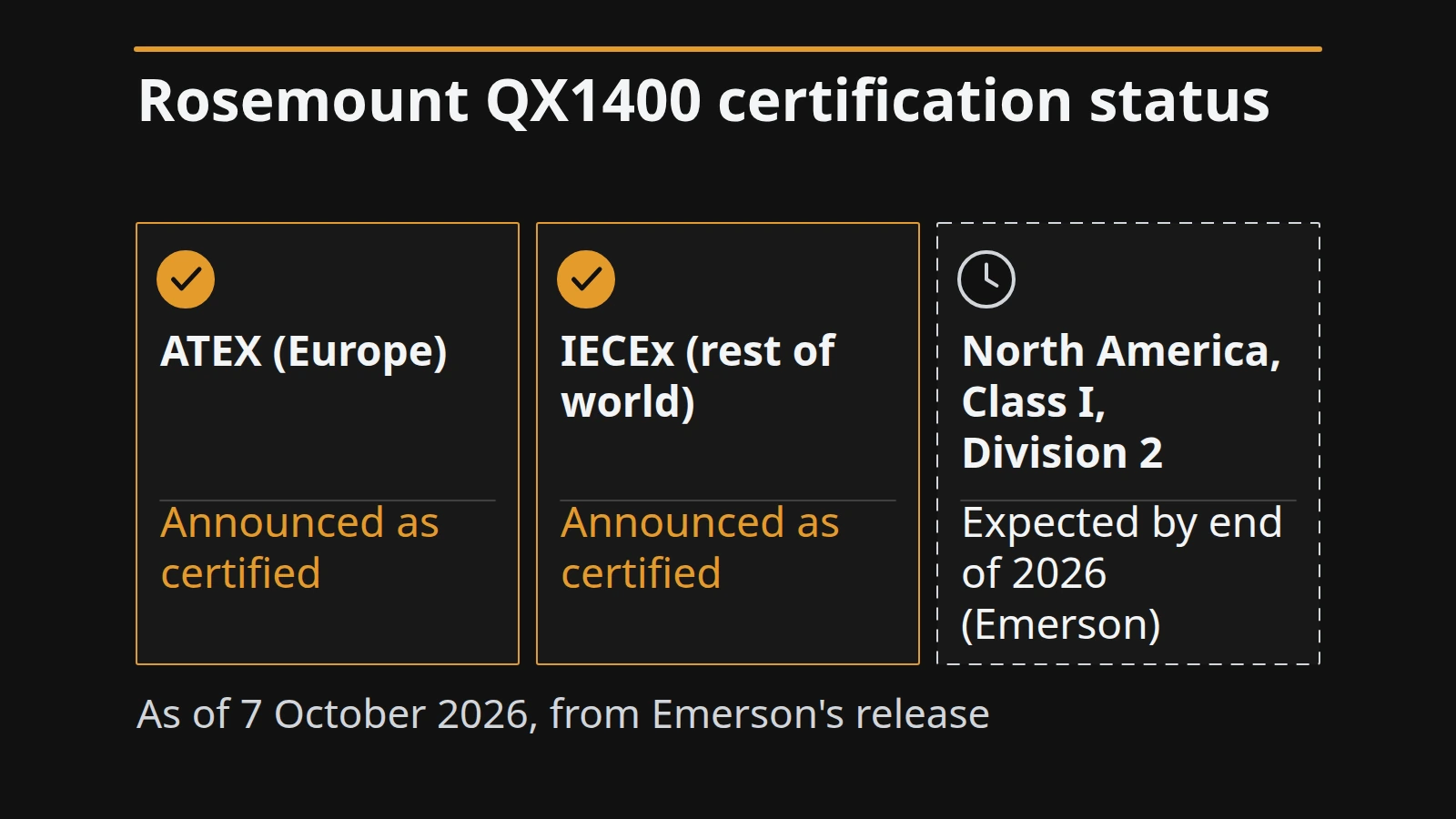
Two approvals are announced as granted and one is expected: ATEX for Europe and IECEx for other regions are stated as current certifications, while North American Class I, Division 2 is expected by the end of 2026. The status table keeps the three apart and adds what is still to be checked.
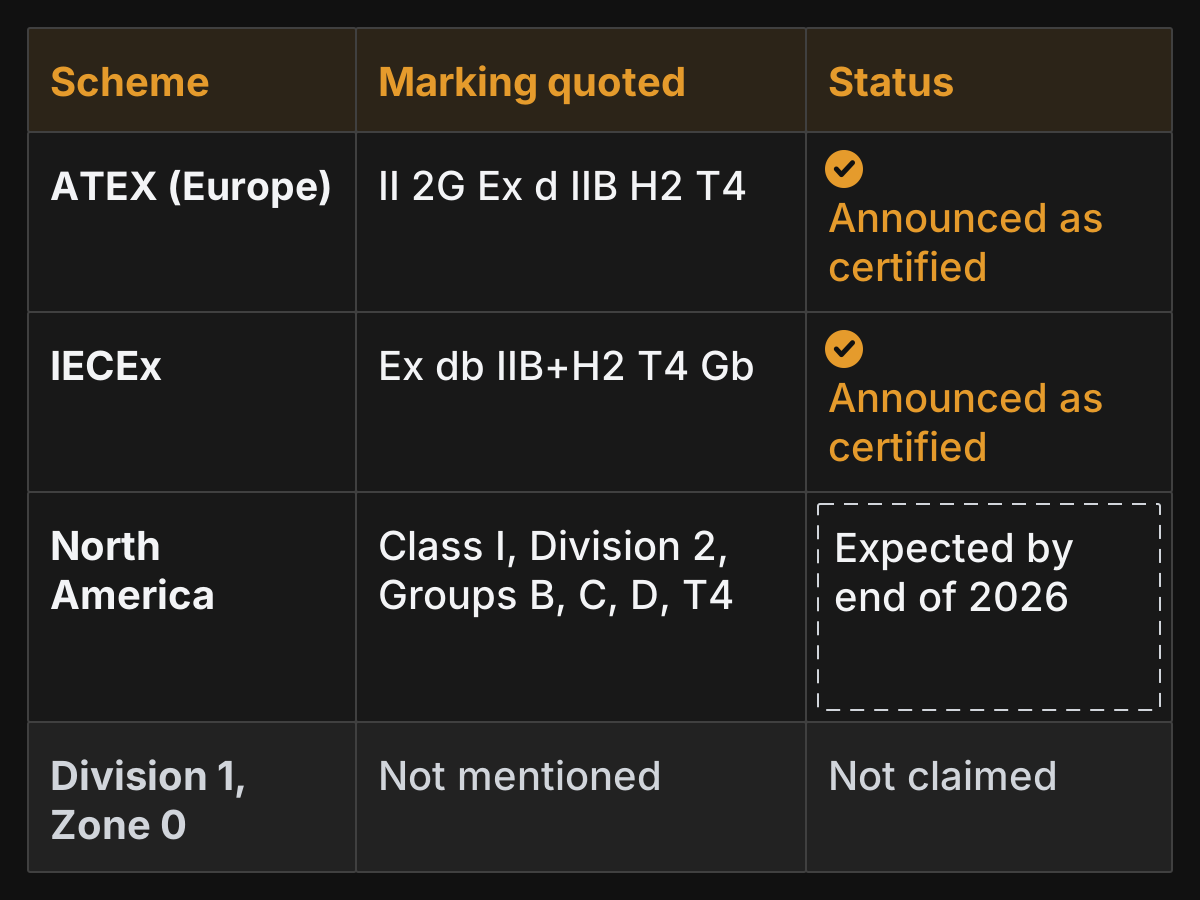
Figure 2. Certification status as of 7 October 2026, from Emerson’s release.
| Scheme | Marking or scope quoted | Status | What to check |
|---|---|---|---|
| ATEX (Europe) | II 2G Ex d IIB H2 T4 | Announced as certified | Certificate and its conditions of use |
| IECEx (rest of world) | Ex db IIB+H2 T4 Gb | Announced as certified | Certificate on the IECEx system and its conditions |
| North America | Class I, Division 2, Groups B, C, D, T4 | Expected by end of 2026 (Emerson) | Whether and when a certificate is issued, and by which laboratory |
| Division 1, Zone 0 | Not mentioned | Not claimed | Do not assume |
Emerson states that these approvals let the QX1400 be installed in certain hazardous areas without protective measures such as explosion-proof or purged enclosures, and in some applications closer to the sampling point. That statement describes where the current approvals apply; for a US site, it becomes relevant only once a North American approval exists.
Industrial News adds that sample conditioning remains necessary even with an approved analyzer, because dust, liquids, temperature, pressure and corrosive components still have to be handled before the gas reaches the cell.
Common mistake: Reading “certified for hazardous areas” as “certified for my hazardous area”. The scheme, the class or zone, the gas group and the temperature class all have to match the site, just as a connector’s published figures only apply to the configuration they were stated for.
Takeaway: Two approvals are announced, one is expected; check the actual certificates before relying on any of them.
How do ATEX and IECEx markings relate to US Class and Division?
They are separate approval systems. In the US, OSHA’s hazardous-location rule, 29 CFR 1910.307, requires equipment in a classified location to be intrinsically safe, approved for that location, or demonstrated by the employer to be safe for it. Under 29 CFR 1910.399, “approved” most commonly means accepted, certified, listed or labeled by a nationally recognized testing laboratory, with narrower alternatives for equipment no such laboratory covers. A European or international certificate is not, on its own, any of these.
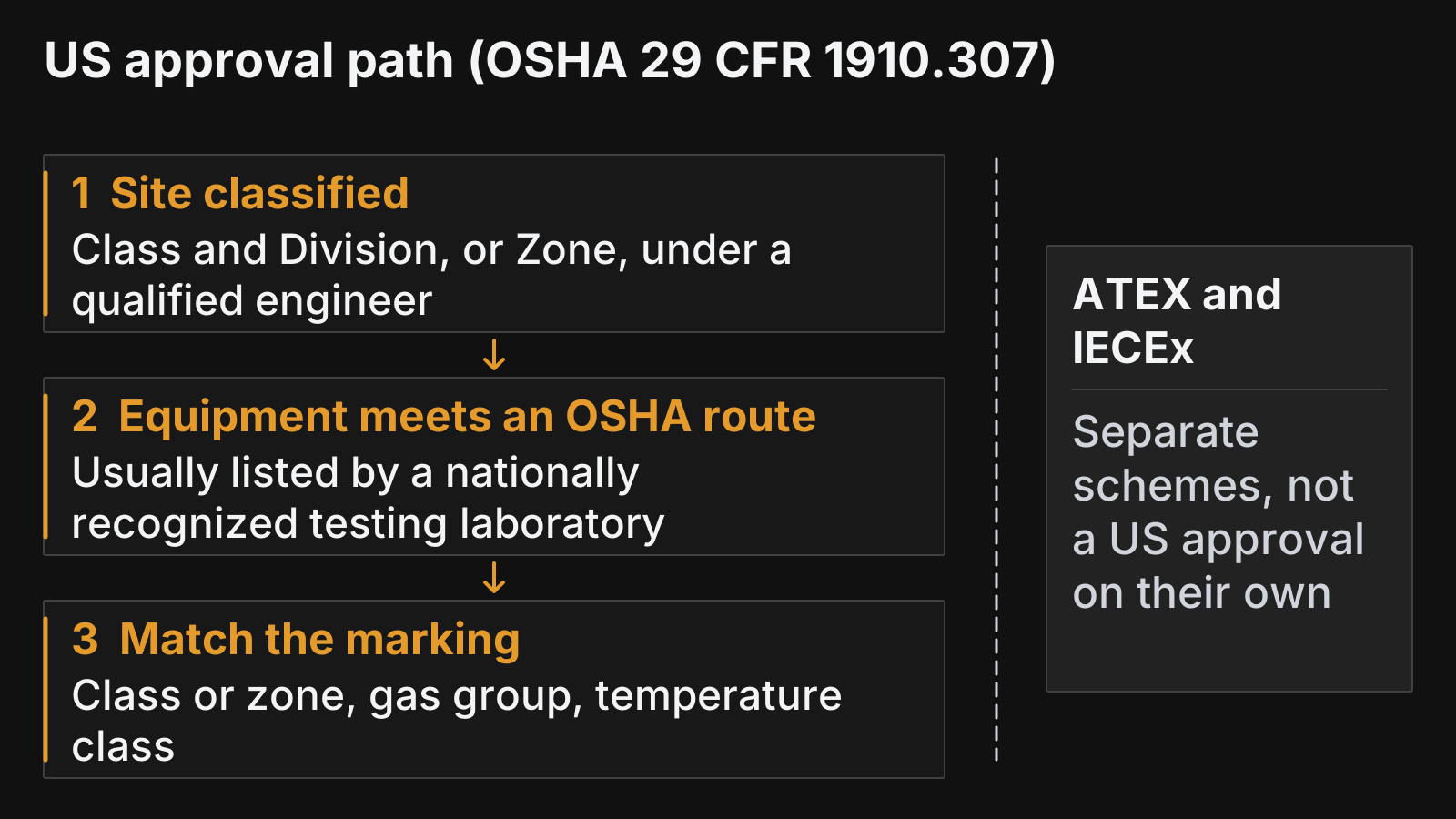
Figure 3. The US approval path under OSHA 29 CFR 1910.307 and 1910.399, compared with the ATEX and IECEx schemes.
| OSHA rule (29 CFR 1910.307) | What it says | What it means for QX1400 planning |
|---|---|---|
| (c)(2)(i) | Equipment must be approved for the class of location and for the specific gas, vapor or dust groups present | The expected Groups B, C, D rating must cover your gases |
| (c)(2)(ii) | Equipment must be marked with class, group and operating temperature | Check the marking on the delivered unit |
| (g)(1) | The zone system may be used as an alternative to the division system | A US site may be classified by zones instead |
| (g)(3)(i) | Flameproof “d” protection is permitted in Class I, Zone 1 locations for which it is approved | US approval still has to cover the zone |
| (g)(4)(i) | Area classification and equipment selection under a qualified registered professional engineer | Your engineer of record decides |
| (g)(4)(ii) | Zone 2 may abut but not overlap Division 2 locations | Mixed-system sites need careful boundaries |
| (e) | Division 1 equipment may go in Division 2 of the same class and group; general-purpose equipment only if the employer can show it is not an ignition source in normal operation | An employer-demonstration route exists but carries its own burden; this page does not assess whether the QX1400 meets it |
So for a US project, the useful question is not whether ATEX equals Division 2 but which OSHA route the installation will use; for most projects that will be a laboratory approval of the delivered unit for the site’s class or zone, gas group and temperature class. Emerson’s release uses “Class 1”; the OSHA text uses “Class I”.
Approval scope also matters for other components in the same panel; our notes on HARTING Han Size 4 certificates show the same per-part check for connectors.
Takeaway: In the US, plan on a laboratory-listed approval for the exact classification, not on the ATEX or IECEx marking.
Who is affected?
The announcement matters most to teams specifying analyzers for natural gas quality, CEMS, LNG and chemical plants with classified areas. The impact differs by where the project sits.
| Reader | What changes | Basis |
|---|---|---|
| Projects in ATEX or IECEx jurisdictions | A certified hybrid analyzer option, per Emerson | Release |
| US projects with Class I, Division 2 areas | No change yet; a future option if North American approval is issued | Release; OSHA 1910.307 |
| Analyzer system integrators | Possible change in shelter or enclosure design once approvals are confirmed | Release; Industrial News |
| Teams already evaluating QX1000 | Same measurement principle with hazardous-area approvals | Release |
Takeaway: Outside North America, request the certificates and check local acceptance; in the US, plan around the current protection method.
When should US project teams act?
US teams can start technical evaluation now and put the North American certificate on the schedule as an open milestone; the shelter or enclosure design should not depend on it until a certificate can be checked.
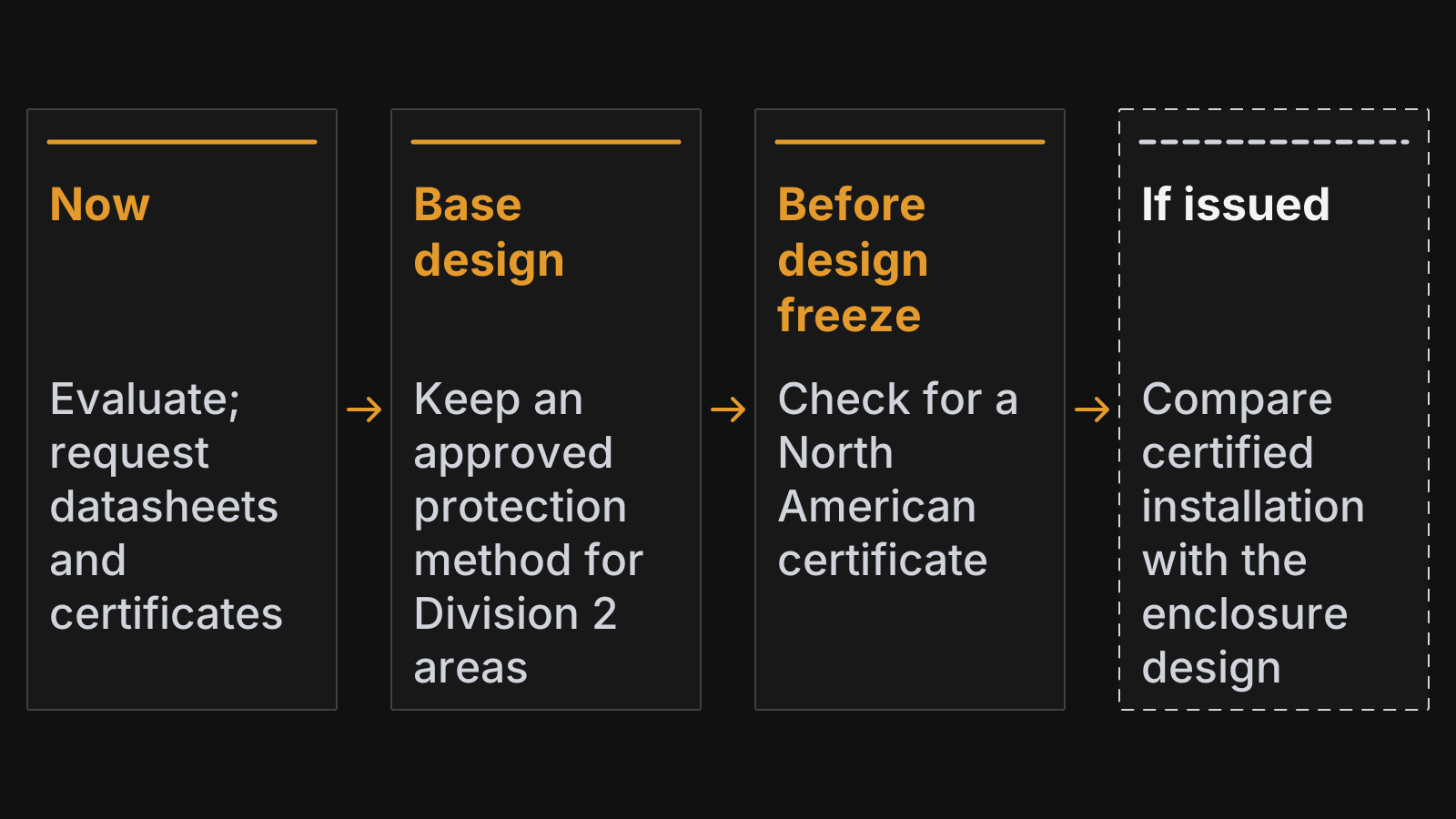
Figure 4. A planning sequence for US projects. Dates other than Emerson’s expectation are your project’s own.
| When | Action | Status |
|---|---|---|
| Now | Request datasheets, ATEX and IECEx certificates and gas configuration options | Ask Emerson |
| Now | Keep an approved protection method (for example, an enclosure solution) in the base design for Division 2 areas | Your engineer’s decision |
| Before design freeze | Check whether a North American certificate has been issued and what it covers; request certificates for other new parts in the shelter too, such as connectors | Expected by end of 2026, per Emerson |
| If issued | Compare the certified installation against the protected-enclosure design | To be confirmed |
When that comparison comes, check both options on the same points:
| Check | QX1400 with a North American approval | QX1000 inside a protected enclosure |
|---|---|---|
| Approval basis | Certificate for the analyzer (pending) | Approval of the enclosure and protection method for the whole assembly |
| Protection boundary | The analyzer itself | Enclosure, purge or explosion-proof system, and its controls |
| Sample conditioning | Still required (Industrial News) | Still required |
| Design freeze condition | Certificate issued and covering your classification | Enclosure solution approved |
| Documents | Certificate, conditions of use, manual | Both manuals, enclosure approval, purge system documents |
If the same shelter also takes new fieldbus instruments, the profileGAUGE C.ODC readiness checklist is a usable template for the document set to request.
Takeaway: Evaluate now, design on today’s approvals, and treat the North American certificate as a dated risk item.
What is still unconfirmed?
The North American certificate and the US installation route decide US designs; the other items affect evaluation. Each row names who confirms it and which document to ask for.
| Open item | Who confirms | Document | Affects |
|---|---|---|---|
| North American approval: whether, when, which laboratory, conditions | Emerson | Certificate and conditions of use | US design freeze |
| US installation route before that approval | Your engineer of record | Area classification documents; protection method approval | US base design |
| How the ATEX and IECEx markings relate to your US classification | Your engineer of record | US approval documents, not inference from the markings | US design |
| Measurement performance, detection limits, price, lead time | Emerson | Datasheet and quotation | Evaluation |
| “World’s first” claim | No independent source found | — | None for design |
| Comparison with QX1000 in a protected enclosure | Emerson and your engineer | Manuals for both models; enclosure approval documents | Option choice |
Certificate titles matter as much as status: a release can cite a standard name that does not match the certificate, as our HARTING Han Size 4 notes show for a railway fire standard.
Takeaway: Ask for the documents in the third column before design freeze.
Our reading
For sites under ATEX or IECEx, the QX1400 adds an approved hybrid analyzer that could simplify shelter design, on Emerson’s account. For US sites, our suggestion is to keep the current protection approach as the base design until a North American approval can be checked; an expected date in a press release is not a design basis. More industrial announcements are tracked in our industrial electronics section; this independent site has no connection with Emerson; all our explainers are listed on the blog index.
Takeaway: Track the certificate itself, and design on what you can verify today.
When this does not apply
- Division 1 or Zone 0 locations. Not covered by any approval quoted in the release.
- Custody transfer metering. This page does not assess it.
- Other Rosemount analyzers. Approvals here are for the QX1400 only.
Takeaway: Read the approvals as specific to the QX1400 and the quoted classifications.
Method and sources
Compiled on 7 October 2026 from Emerson’s release of 1 October 2026, the OSHA regulations 29 CFR 1910.307 and 1910.399, and trade press reports of 2 and 5 October 2026, which are based on Emerson’s materials. We have not seen the certificates. We will update this page when a North American certificate is published.
Takeaway: Every product fact here is Emerson’s; only the regulatory points come from OSHA’s text.